
Story DPS · Bali
What I missed while eating in Bali
From a café where I waited for breakfast to a warung where lunch arrived almost immediately, I kept finding more to a meal than I expected.
Written and photographed by Ethan Ward
Went: 2 trips, 2 weeks and 2 months
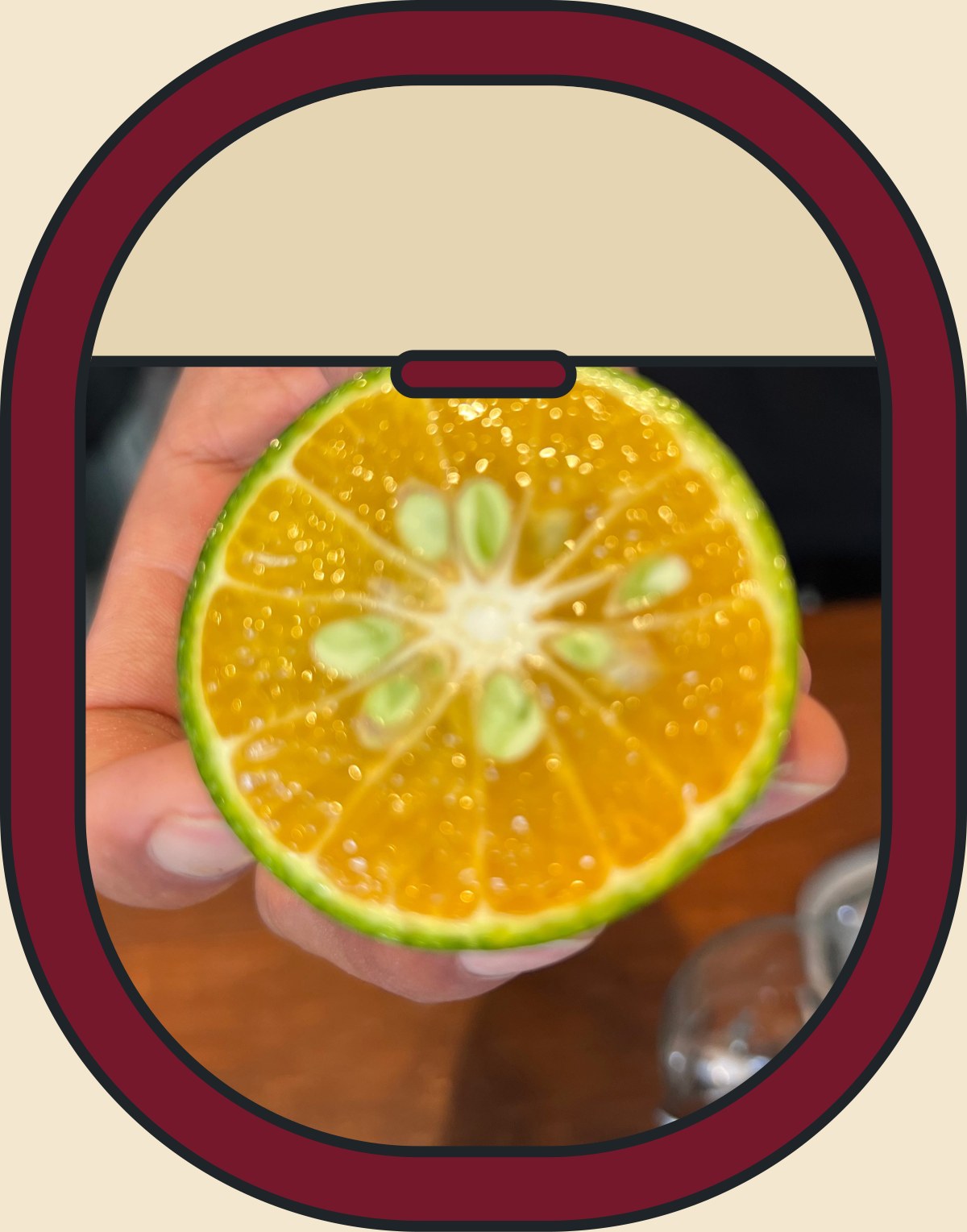
The man behind the counter at Arum Coffee took an orange from a basket, and I almost told him it wasn’t ripe. The skin was green all the way around.
He cut it in half. Inside, the flesh was orange. He put the halves on a hand press, leaned into it, and turned them until the juice ran into a paper cup. Then he put on the lid and handed it to me.
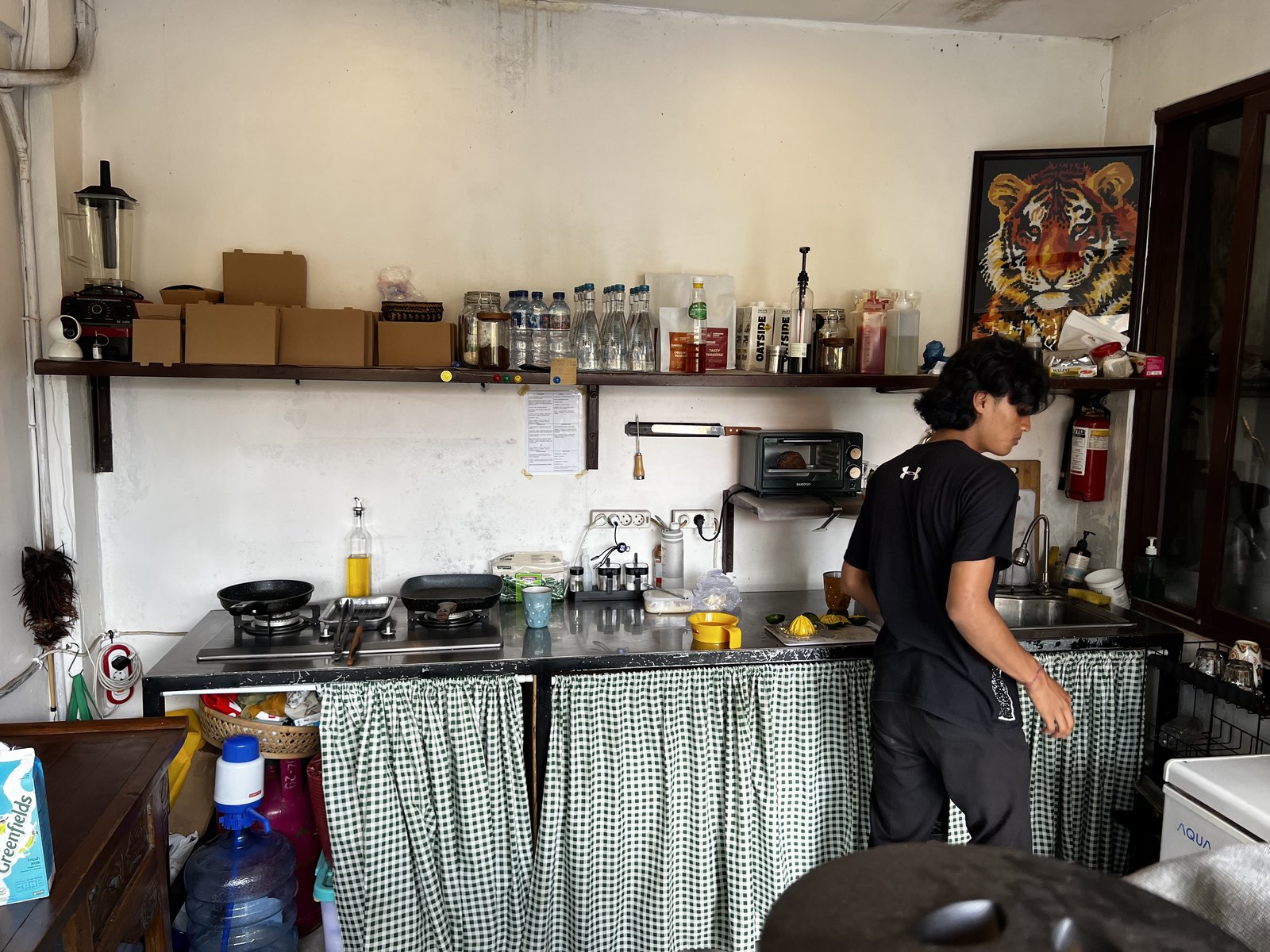
I came back to Arum most mornings, but I was still getting used to the wait. On one visit, I ordered an acai bowl, walked down the block to another shop, and returned before it was ready. In Los Angeles, that would have gotten under my skin. I was used to food being ready before I was.
The people behind the counter were working the whole time. They cut the fruit and assembled each bowl after someone ordered it. There was no cold case full of finished bowls. I could watch the work that accounted for the wait.
I had come to Bali with plenty of opinions about food. Some of them lasted about as long as it took to cut open an orange.
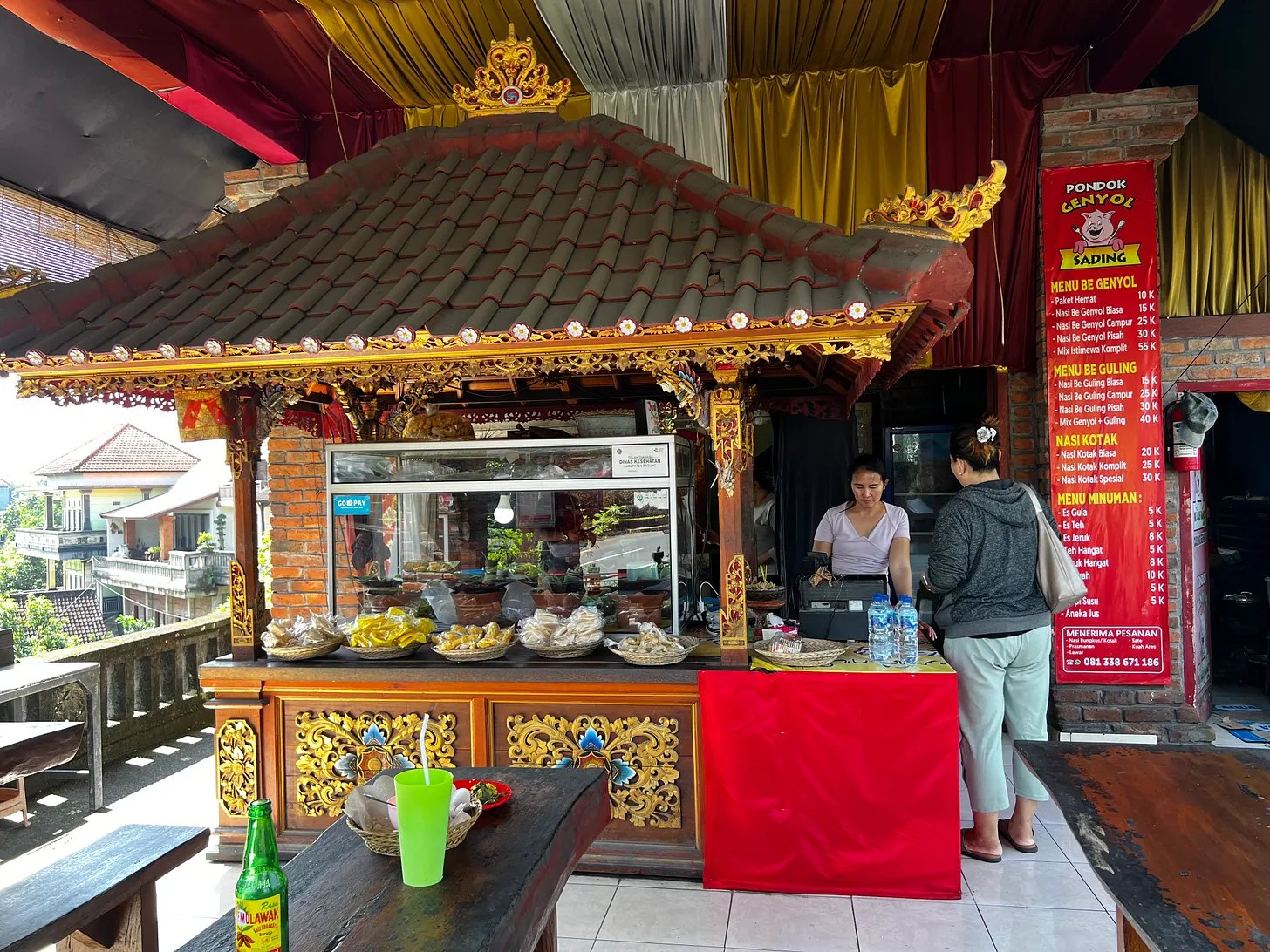
My friend Agus, who grew up on the island, had started as my driver. One day he turned off the main road and took me to a warung he liked, Pondok Genyol Sading.
It was open to the air under a tiled roof, with wooden benches and a gold-painted counter shaped like a small temple. Prepared food sat behind glass. Agus ordered for both of us without looking at the menu.
My plate cost 15,000 rupiah and arrived almost as soon as he asked for it.
There was shredded pork, long beans with grated coconut and chili, a grilled minced-meat skewer, and a piece of crackling. A bowl of clear broth came alongside it, and we shared a basket of warm rice.
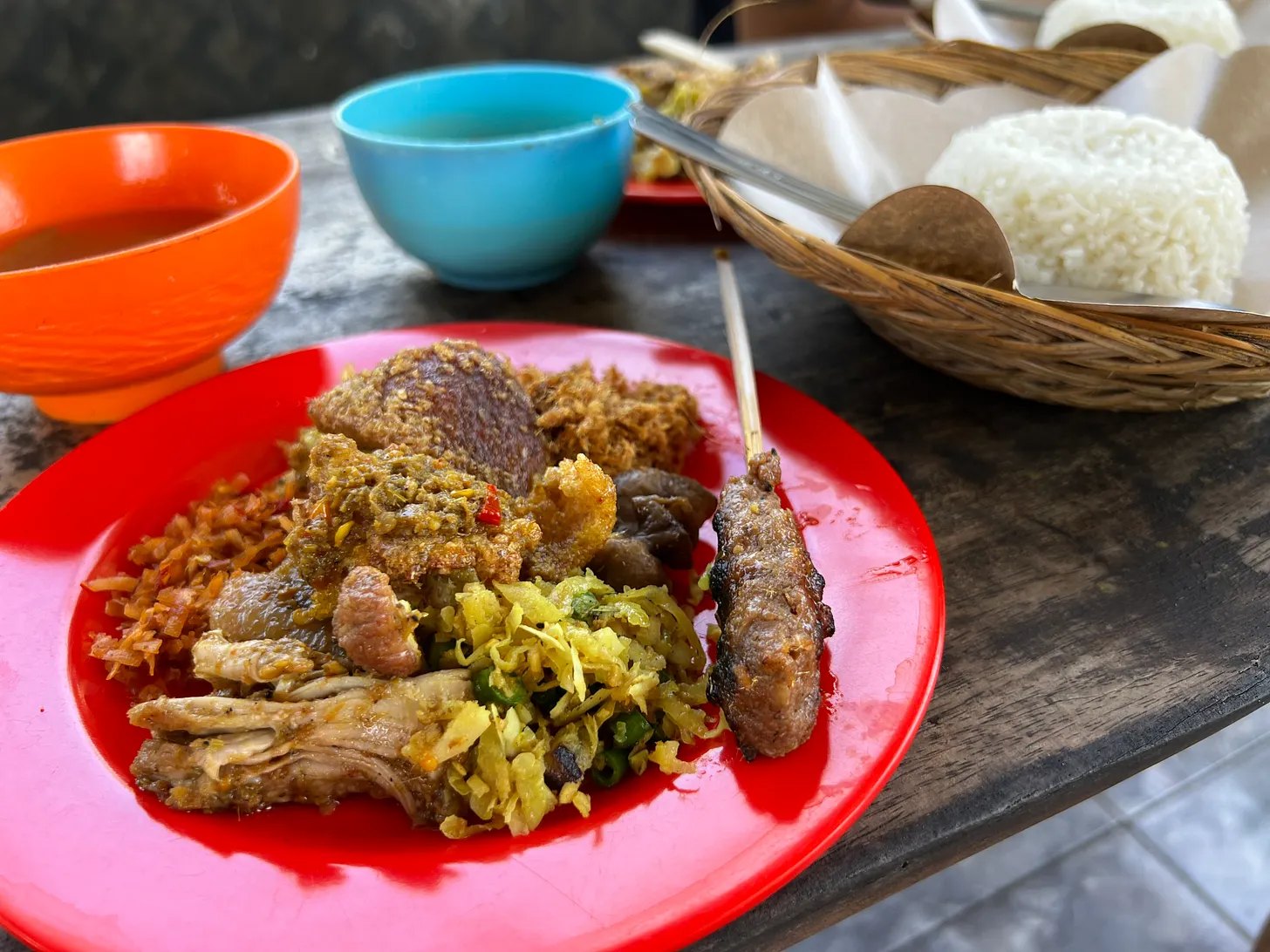
The food was ready when we sat down. At Arum, I had watched someone start my order. Here, the cooking had happened before I asked for lunch.
The benches filled while we ate. I noticed people looking at me. Agus laughed and said they didn’t get many tourists there, then went back to his rice.
Later, I asked why I so rarely saw other tourists in places like this. He thought some visitors were put off by the simple setting and the way the food was served. They assumed it wasn’t clean, he said. In his experience, people who stayed longer became more comfortable with it.
What he liked about the warung was the building. He described it as old Balinese, and said the room stayed cool and calm.
Agus also liked McDonald’s.
As we passed one on the way to a museum, he told me about going as a child. It cost more than a meal from a stall. There was the playground and the ball pit, and a cousin’s birthday that meant a trip into town. He remembered going for a celebration, rather than every day.
When I asked what justified the price, he said the ingredients were select. That was part of what he thought he was paying for.
I had grown up treating fast food as an ordinary meal. A restaurant meal made for me was more likely to be an occasion.
At Pasar Sayan, he pointed me toward the food people bought to start the day. Three women worked at a low table covered with enamel platters. There were rice and coconut sweets, some wrapped in banana leaf. One woman spooned what I pointed at into a cone of leaf. Another counted my change while the third kept folding.
Agus called it the island’s fast food. It was ready to take away, and I could see it being portioned and wrapped in front of me.
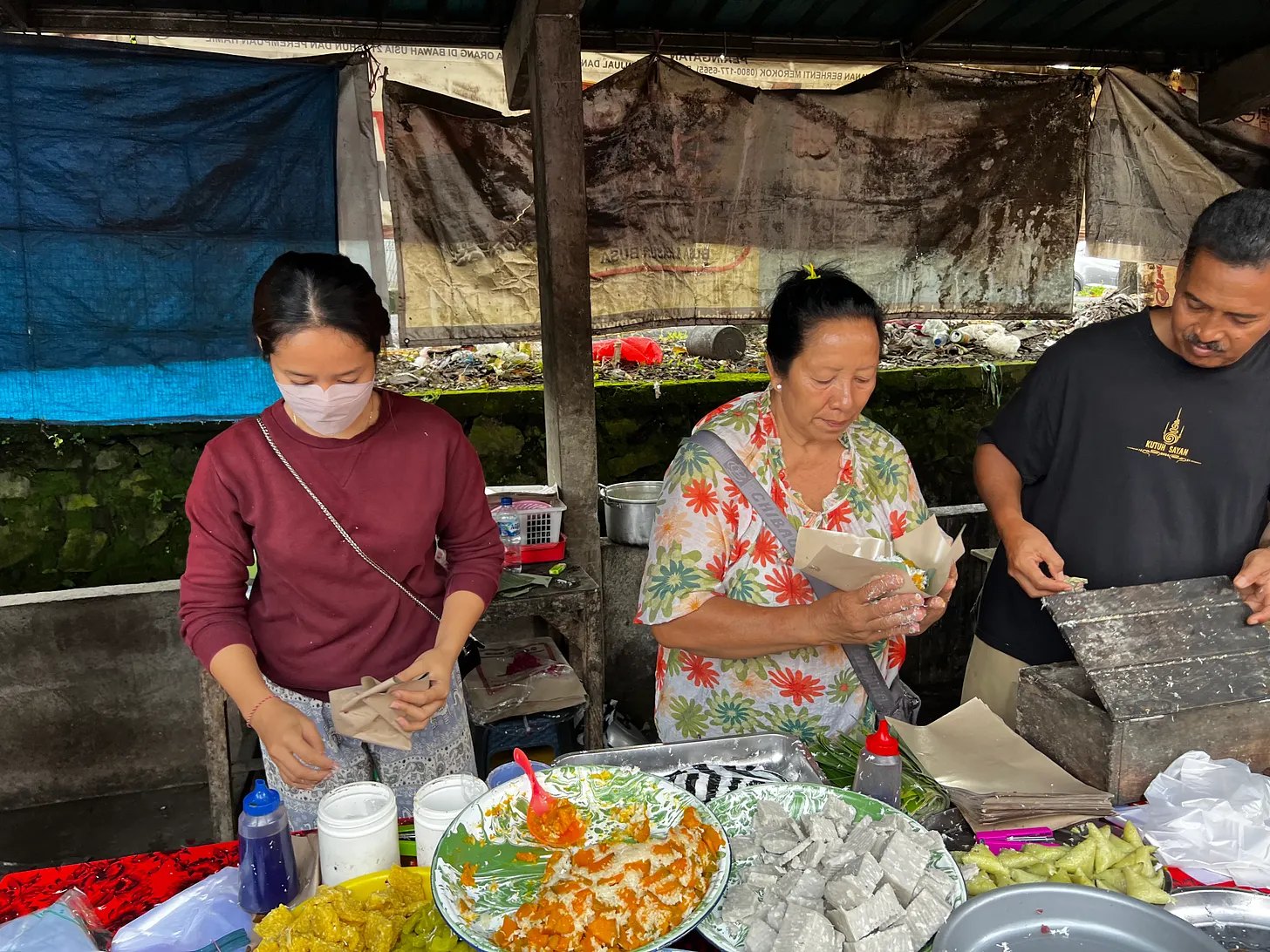
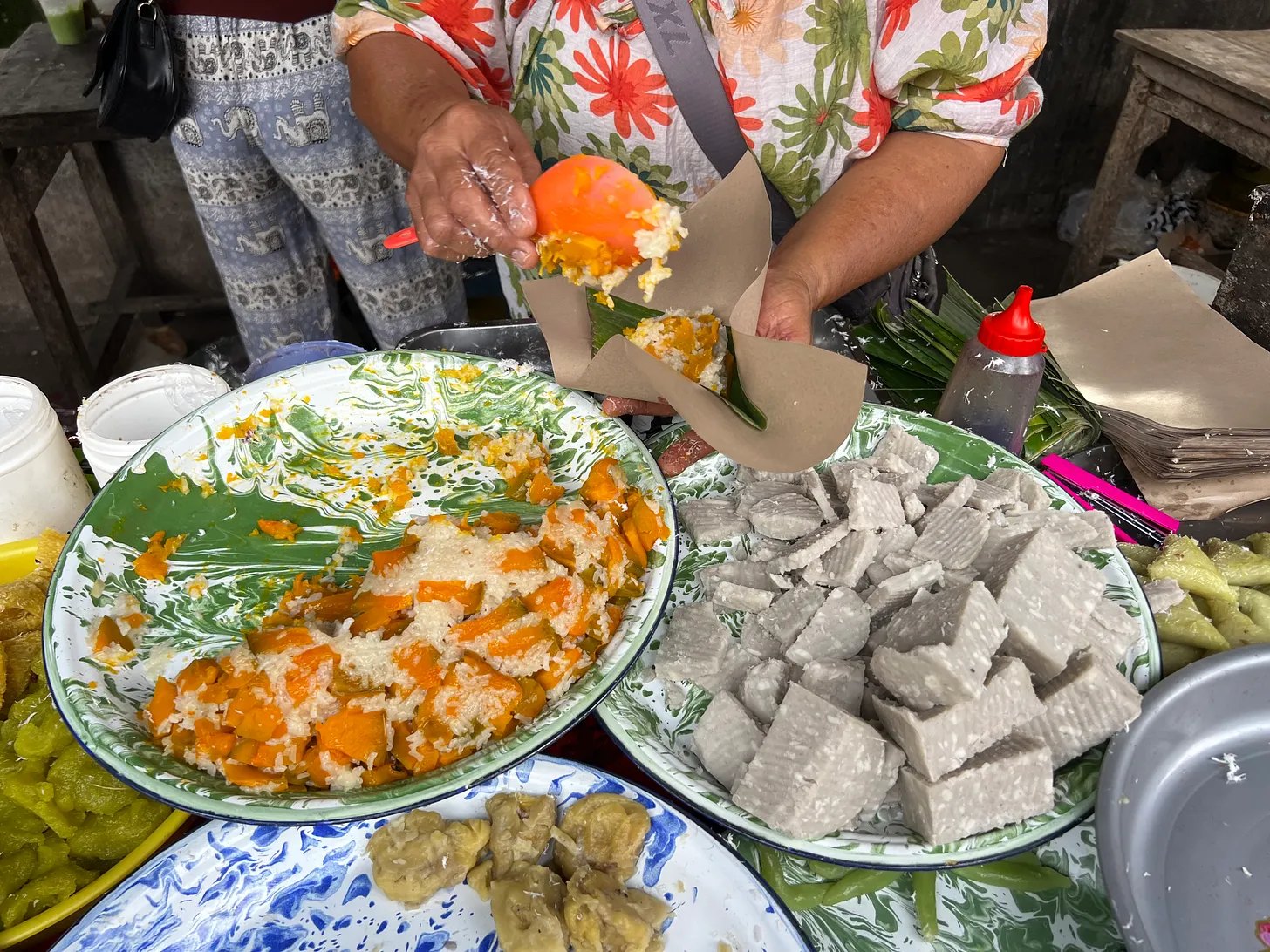
I was interested enough to photograph the women’s hands and the food on the platters. Back at the villa, I had been paying much less attention to the breakfast brought to me most mornings.
Ardana owned the villa and lived in the family compound around it. He cooked breakfast himself. Before carrying the tray onto the kitchen floor, he slipped off his flip-flops at the edge of the tile.
I initially wanted that gesture to tell me something particular about him. Then I kept seeing other people do it too.
The breakfast was good. Eggs, potatoes, a tomato blistered in the pan, cut fruit, green juice, and coffee. I slept late, so mine usually came around 10. The eggs were still soft and the potatoes were hot. He prepared it at the time I requested.
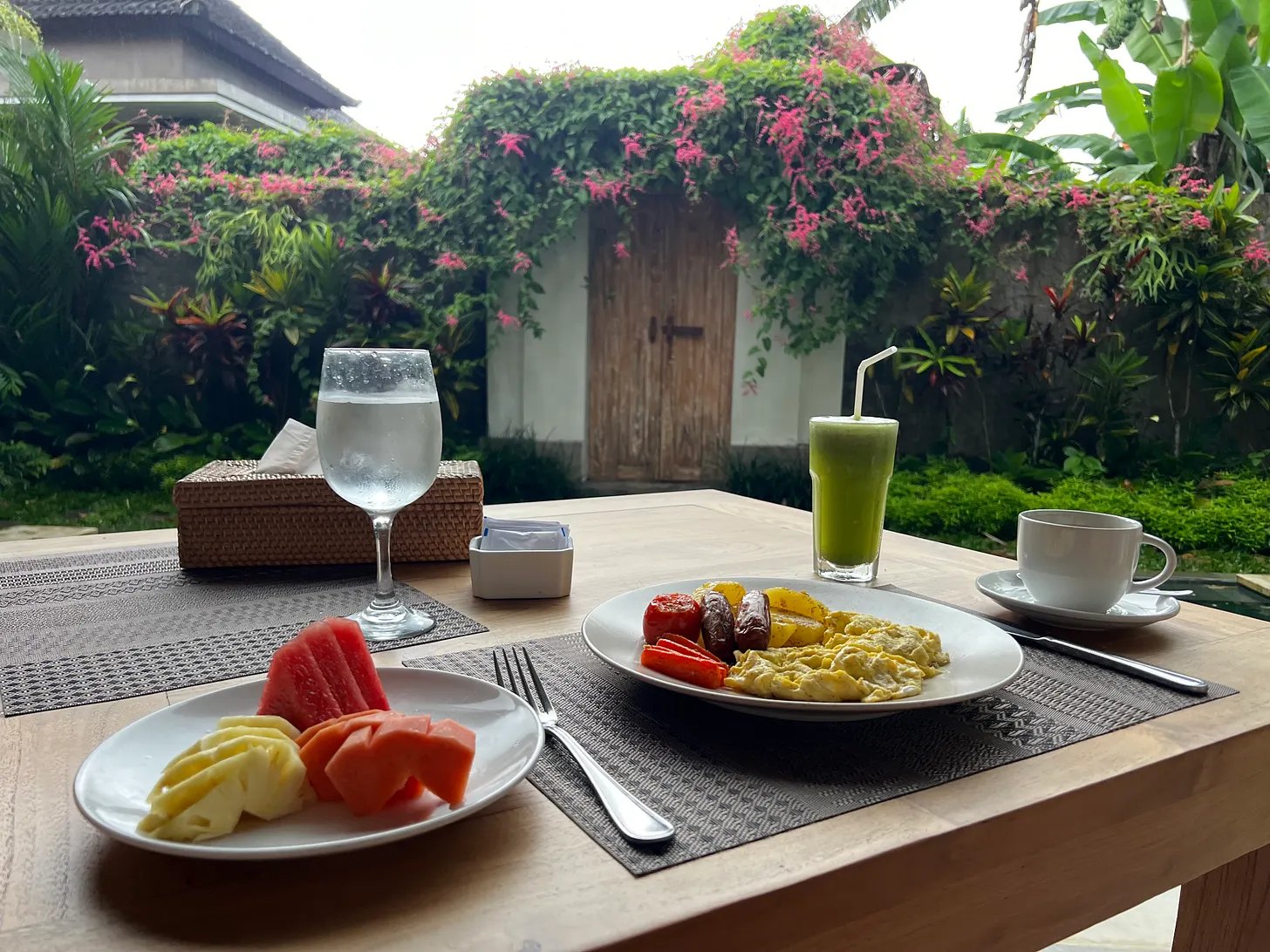
One morning, Ardana told me he had worked in hospitality in the United States before returning to Indonesia. He arranged the fruit carefully and placed the fork square to the edge of the plate. Breakfast was included in the room rate, and I had started treating it as something that simply arrived while I looked at my phone.
At the café and the market, I had stopped to watch people prepare food. Ardana was doing that work for me every morning. Having it included in the booking had made it easier for me to overlook.
A couple of weeks later, I went to KFC. Agus had said the chicken was locally sourced and worth trying. I ordered a few pieces to see whether I could taste a difference.
It tasted like KFC.
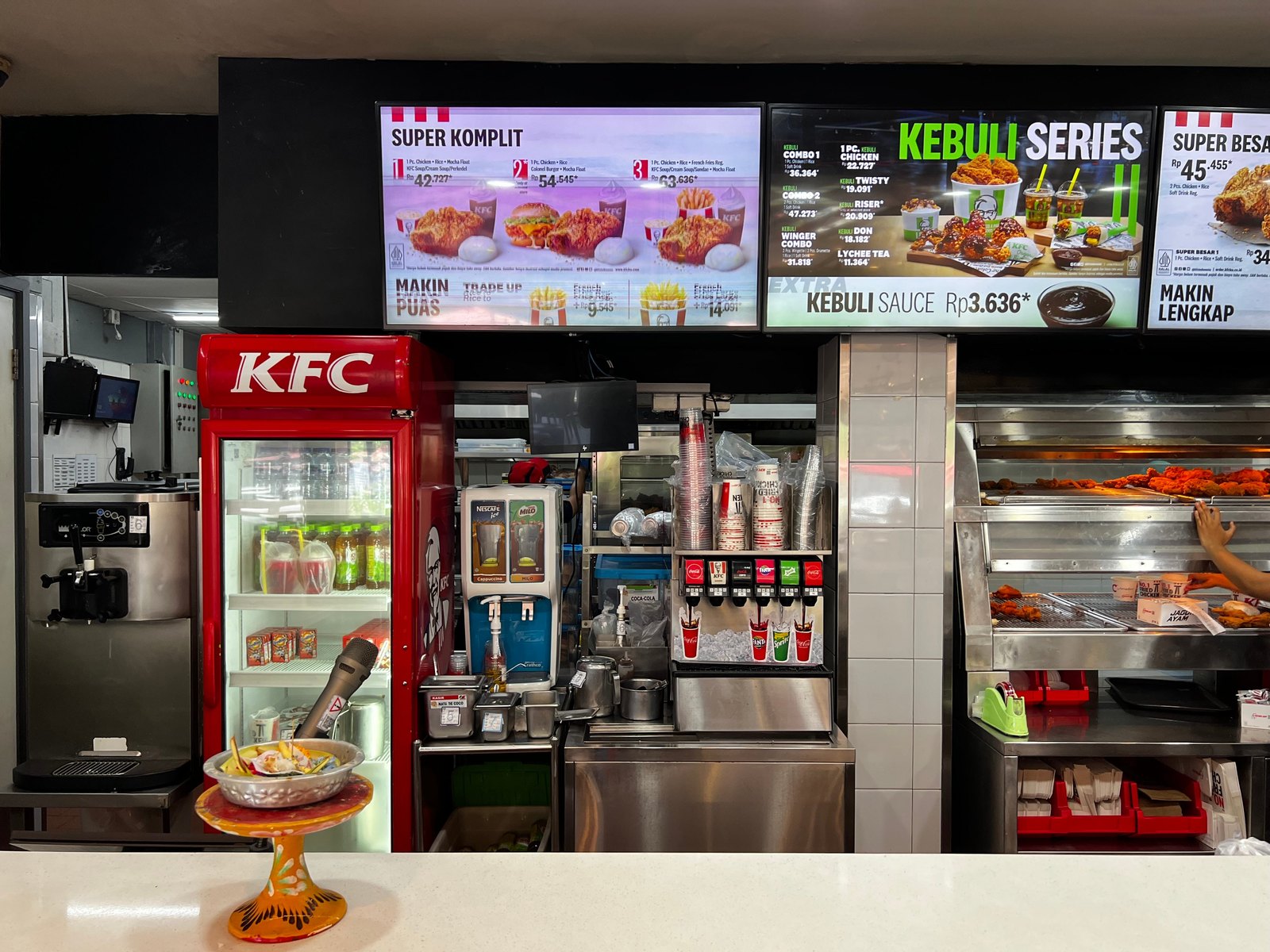
The restaurant was bright and cold, with families sitting at fixed stools. The menu boards showed rice meals, kebuli seasoning, and lychee tea. Agus described it as a place he liked, much as he had described the warung. To him, KFC and McDonald’s offered slightly different food at about the same price. Both were places to visit occasionally.
I had been inclined to see the chain as a foreign business imposed on Bali. Agus was choosing to eat there.
That morning at Arum, I drank my juice on a bench facing the street while scooters went by. I had watched the orange being cut and pressed. I still didn’t know everything about it. I knew it was ripe, and I was glad I hadn’t sent it back.


Each issue has a letter from me, one long story, and picks I’d book again.
Free. One email a month. I never sell your address.


