
Story DPS · Bali
Some people travel. Their hierarchy does too
A look outside a restaurant in Ubud reminded me how familiar racial assumptions can feel far from home.
Written and photographed by Ethan Ward
Went: 2 months
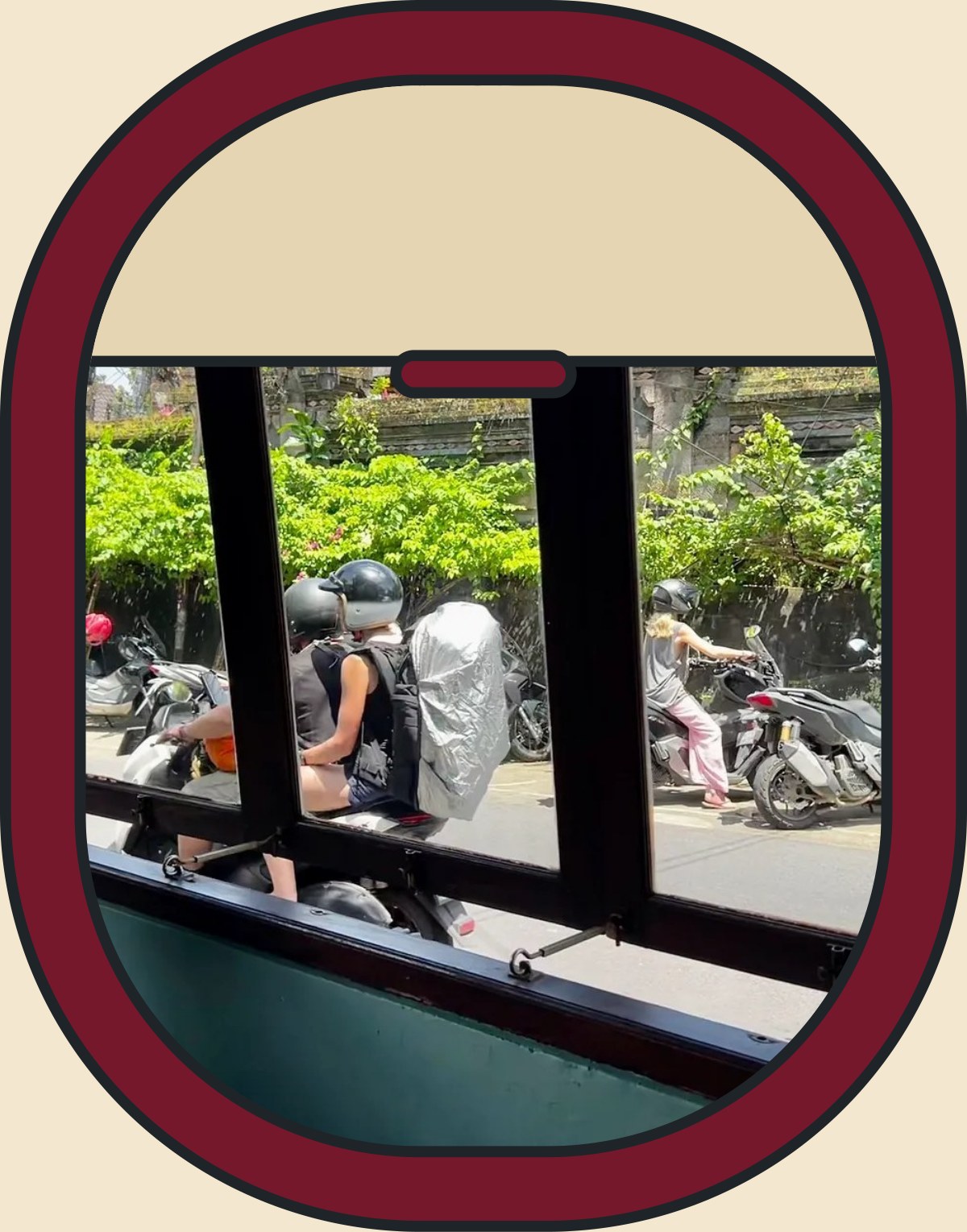
I was sitting by the window at a restaurant in Ubud, waiting for my food, half on my phone and half watching the street.
A white couple came out of the restaurant next door and climbed onto a motorbike. I looked up just as the woman looked over at me. She glared. I laughed out loud.
It struck me as offense, the look someone gives when they think you’re somewhere you shouldn’t be. And my first thought was: No—what are you doing here?
Not because I belonged there more than she did. I didn’t. We were both visitors in Bali. That was the point.
I couldn’t know what she was thinking. But as a Black man, I recognized the feeling of being looked at as though my presence needed explaining. I’d seen versions of that look from white travelers in Vietnam and Thailand, too. Being far from home hadn’t made it unfamiliar.
What bothered me was the assumption I read in it: that even here, someone else got to decide whether I looked out of place. A person could arrive in a country where neither of us lived and still seem surprised to find me moving through it as freely as they were.
I don’t expect every trip to change someone’s life. Sometimes you just want to eat somewhere else and have a few days off. But I do think being a guest should interrupt the habit of treating yourself as the person everyone else has to account for. You have arrived in a place where people already have lives. So has the other visitor sitting by the window.
Tourism has also helped make that sense of superiority feel ordinary. In his research on mountain resorts in colonial Java, historian Arnout van der Meer describes European-style hotels and familiar meals within a tourist network that reinforced colonial racial hierarchies. Visitors could go abroad and have their position in the world confirmed. Encountering another place did not necessarily mean questioning it.
That history doesn’t tell me what a woman on a motorbike meant by a look. It does make me question the idea that travel, by itself, makes people more open.
The encounter lasted maybe 2 seconds. What made me laugh was the absurdity of feeling that familiar scrutiny while we were both away from home. I was sitting at a restaurant waiting for my food. She was getting on a motorbike. Neither activity gave either of us a claim on Bali.
I had no more right to decide she was out of place than she had to decide that about me. We were both guests. I didn’t see why being Black should make me the one who needed reminding.


Each issue has a letter from me, one long story, and picks I’d book again.
Free. One email a month. I never sell your address.


