
Story DAD · Hoi An
On Tinder in Vietnam, he asked if I was a woke American
I wanted someone to walk around Hoi An with, and ended up asking a Tinder match to explain what he meant by “woke.”
Written and photographed by Ethan Ward
Went: 1 month
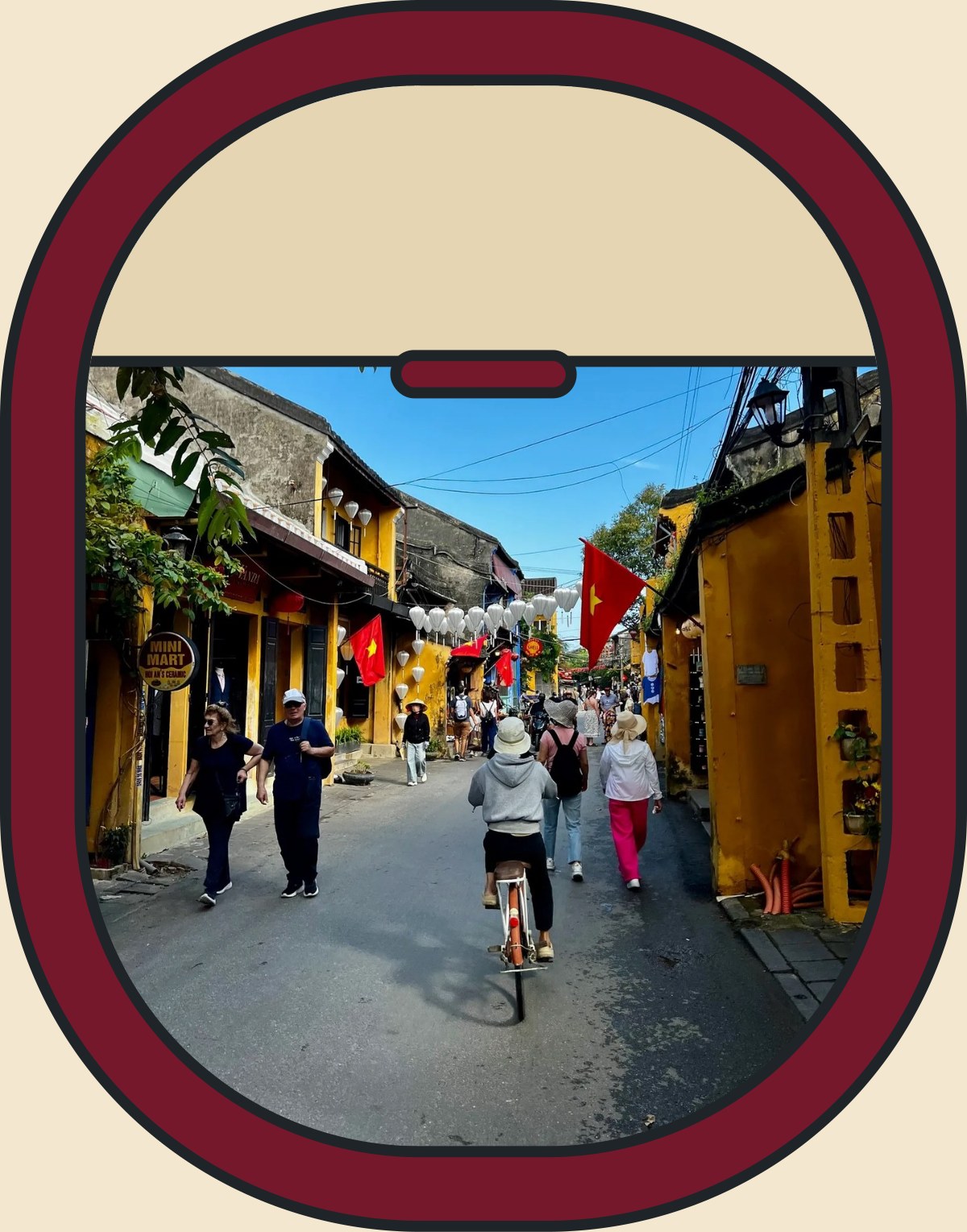
I matched with a guy on Tinder while I was in Hoi An, Vietnam.
I don’t usually match with people when I’m traveling. I’m not a hookup girlie, and if I’m not staying somewhere long enough for anything to make sense, I tend to leave it alone. But Hoi An felt slower. I thought I might meet someone to walk around the ancient town with, or head to Da Nang.
He was Vietnamese and said he wanted friends and hangouts. That sounded fine.
Two messages in, he asked where I was from. He said he couldn’t tell. Shout out to my carefully curated Tinder profile, because that was intentional. I mentioned a few places I’d lived and said I was traveling through Southeast Asia.
“Oh wow. I’ve been here since birth. I’ve never left the country.”
Then:
“So are you one of those woke Americans?”
I asked what he meant.
When someone says something that feels off, I ask them to explain it. Sometimes they clarify. Sometimes they hear themselves. Either way, I would rather know what they’re actually saying than keep guessing.
He told me I probably wasn’t familiar with the term. Then he sent a definition describing awareness of social injustice and advocacy for equity, including its roots in African American Vernacular English.
“Courtesy of ChatGPT.”
I knew the word. I wanted to know what he was asking me.
Was “one of those” supposed to be a joke? Was he asking about my politics, or checking whether I would object to something he wanted to say? A definition didn’t answer any of that.
So I asked again. What did he want to know? Why was this coming up?
He said he was joking. Said it wasn’t funny. Suggested asking a simpler question.
I told him I preferred clarity to assumptions. I also told him I had encountered racist Vietnamese people and wanted to be explicit about what was being said.
He replied: “I don’t like racists. But I do make racist jokes sometimes with my friends.”
I unmatched him immediately.
What did you think was going to happen next?
What he felt comfortable saying
What bothered me was how casually he offered that information. He was talking to a Black man he had just matched with and apparently thought admitting to racist jokes was compatible with us continuing to make plans.
To me, that comfort said something about the company in which he made those jokes. He described them as an ordinary part of being with his friends. I heard someone accustomed to treating racism as entertainment, with little expectation that it would cost him the conversation.
Saying he disliked racists didn’t make the next sentence less racist. The qualification about his friends made me wonder why he expected their permission to extend to me.
And then there was the word that had started all of this.
“Woke” developed in African American English, with a history of urging alertness to racial injustice and danger. It later became a disapproving label for progressive people and politics. A word used to tell Black people to pay attention became something people could throw at us for doing so.
Here I was in Vietnam, being asked whether I was “one of those.” I recognized the suspicion in that phrasing. I had asked him to explain it, and he had sent me a definition that named the word’s Black origins before telling me about the racist jokes.
The history was available. It was right there in the message. What I couldn’t see was any understanding of what it should mean for how he spoke to me.
He had the language of an American political argument ready for a stranger. When I questioned it, he reached for a definition. When I made the concern about racism explicit, he told me about the jokes he made with friends.
I had opened Tinder because I thought it might be nice to have company in Hoi An. Before we had arranged a walk, I was already explaining why I wanted clarity about racism.
His answer gave me enough. I wasn’t going to spend the afternoon finding out which jokes he expected me to tolerate.

Read next: Some people travel. Their hierarchy does too

Each issue has a letter from me, one long story, and picks I’d book again.
Free. One email a month. I never sell your address.


