This website uses cookies

Read our Privacy policy and Terms of use for more information.

Story  SGN · Ho Chi Minh City

Inside the War Remnants Museum in Ho Chi Minh City

Twelve photographs from a visit that brought me face to face with the violence, personal accounts, and acts of remembrance preserved inside.

Written and photographed by Ethan Ward
Went: 1 month
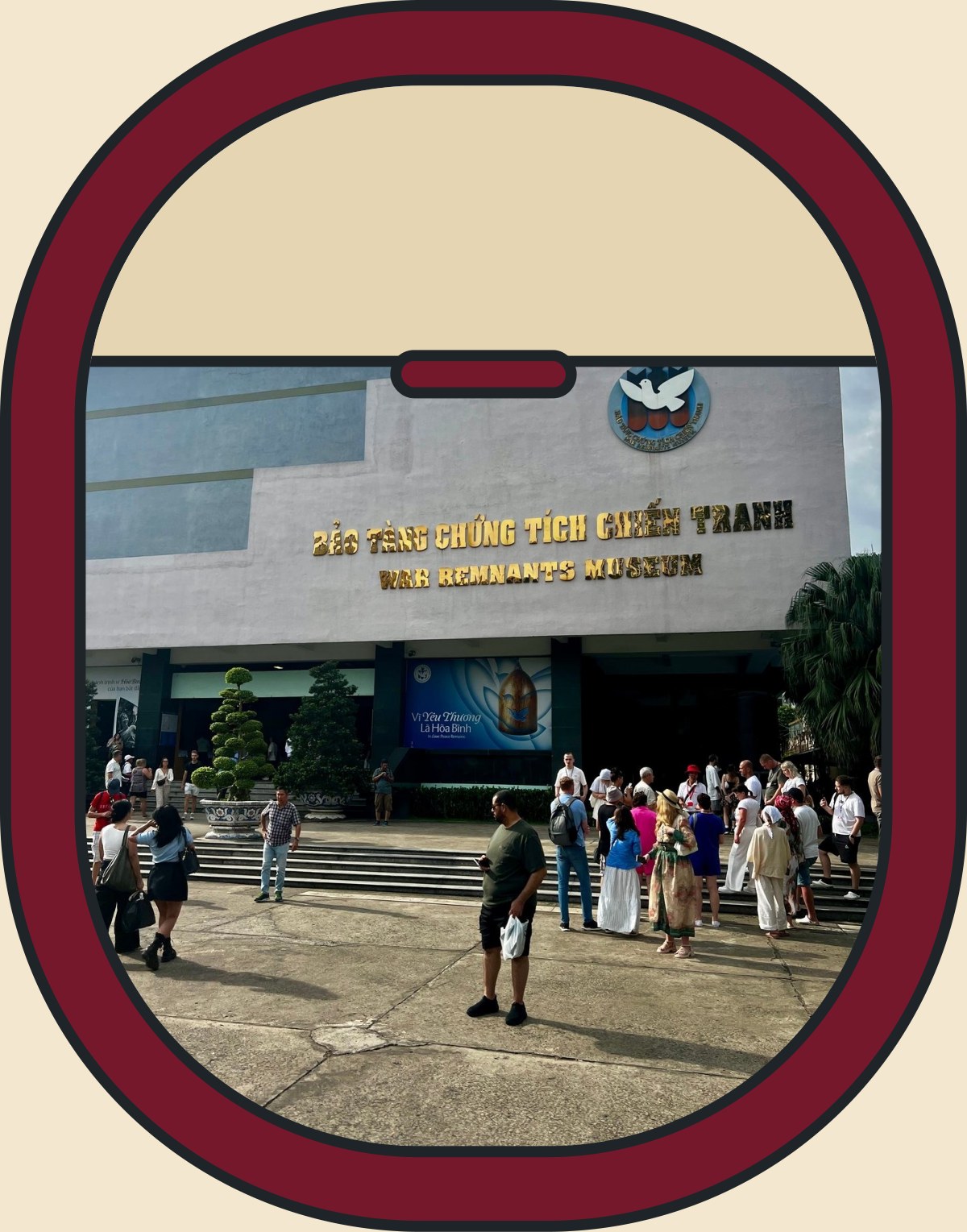
Photo of visitors gathered on the plaza outside the War Remnants Museum, beneath its name in Vietnamese and English.
The War Remnants Museum, on Võ Văn Tần Street in District 3.ETHAN WARD

I went to the War Remnants Museum looking for context. I wanted to know more about the history I was carrying around Ho Chi Minh City.

What struck me first was how direct it was. Even the entrances. One gallery is labeled “War Crimes.” The whole place was somber, and the way it’s laid out, you feel the weight of it.

As an American, and as a Black American, I was overwhelmed. The war ended 7 years before I was born, and I still stood there thinking, I can’t believe my country did this. I didn’t know people were still living with the effects of Agent Orange today.

I didn’t photograph some of what I saw. It felt too insensitive. What’s here isn’t the worst of it. These are photographs of the museum and its displays, including historical images made by other photographers. I’ve credited their work where the display does.

The museum gave me more to consider about the country I was visiting and the one whose passport I carried. These are 12 of the photographs I brought out with me.
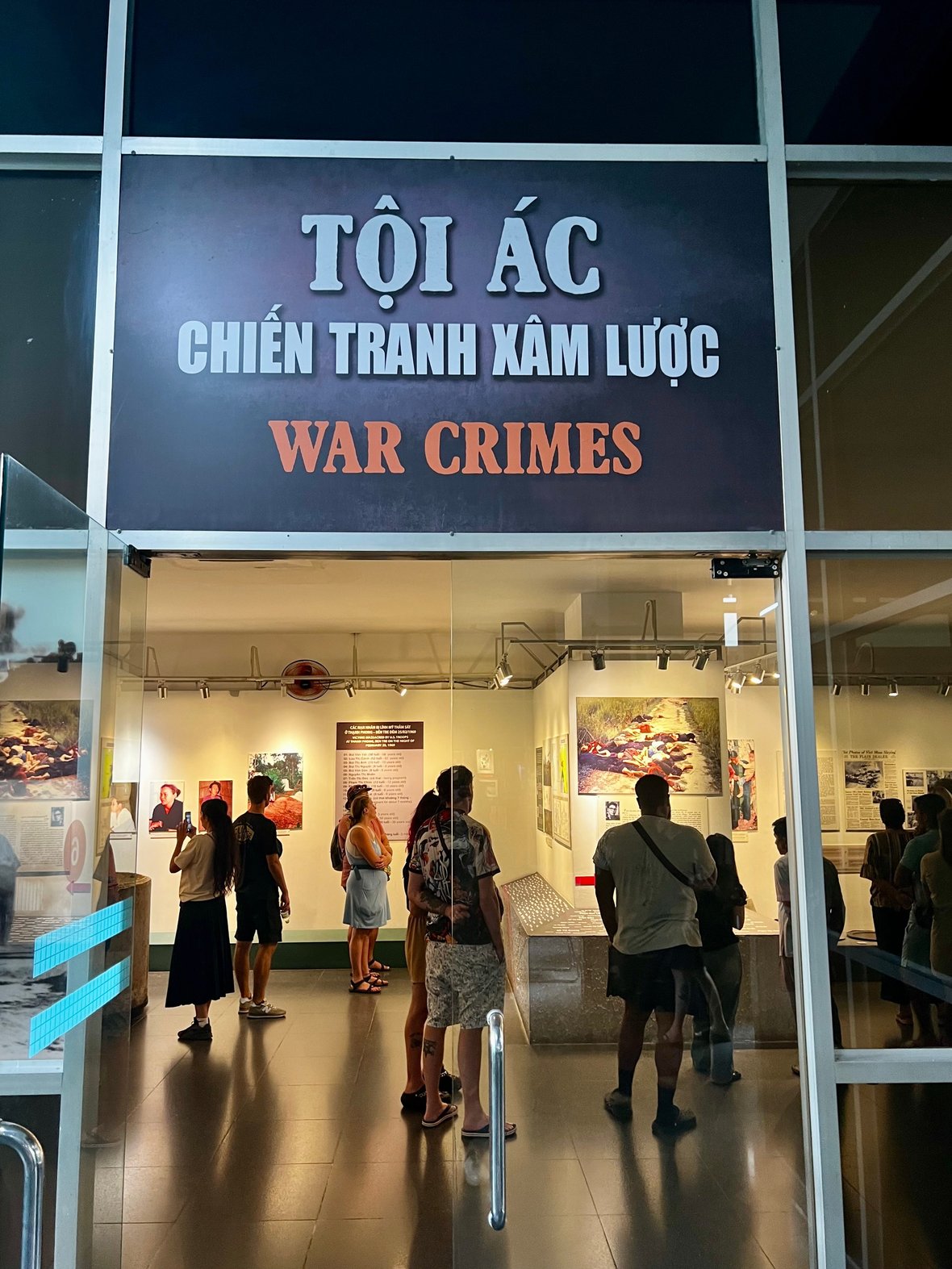
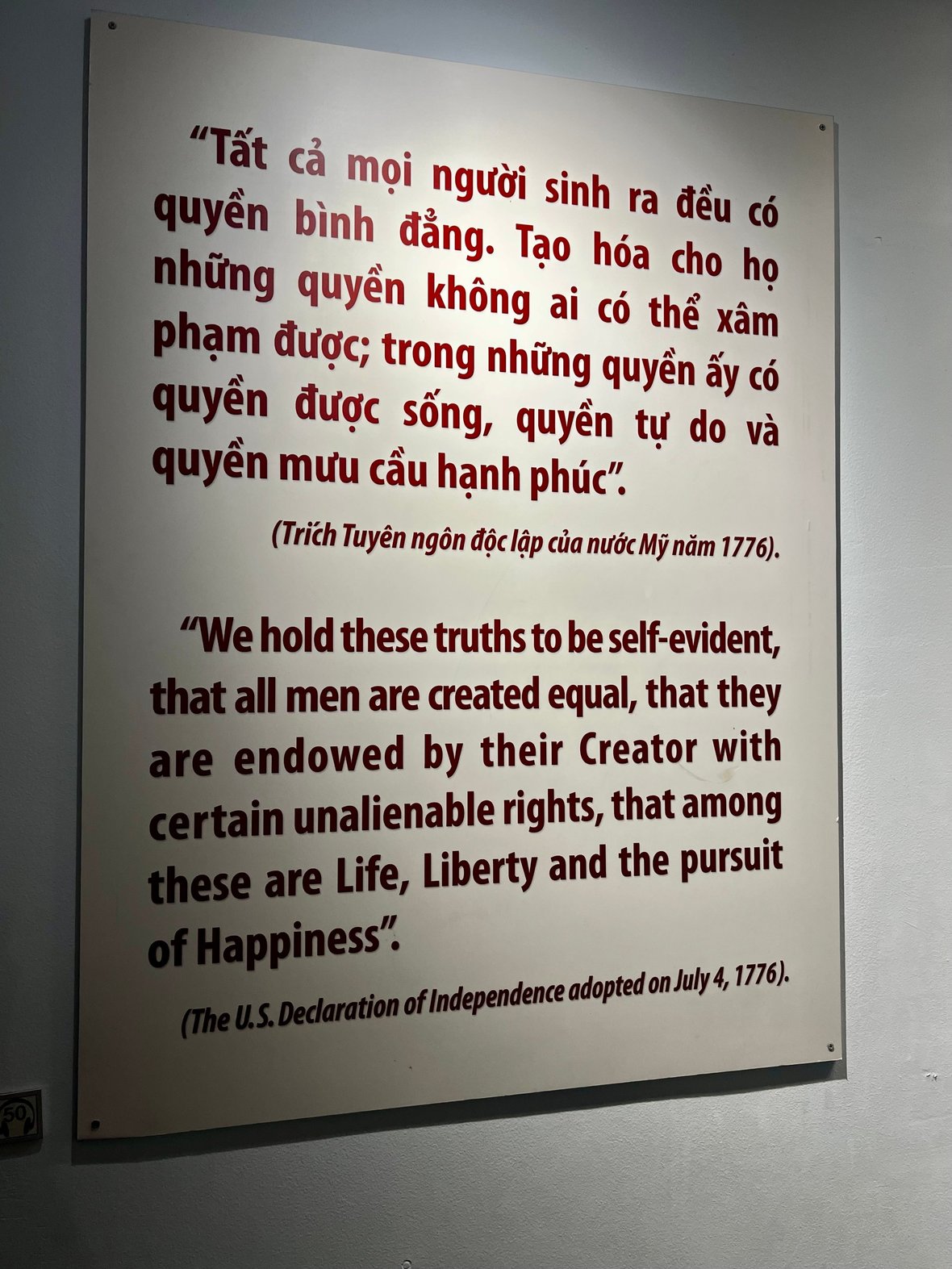
Photo of visitors inside a museum gallery beneath a large sign reading War Crimes in Vietnamese and English.
The entrance to the War Crimes gallery. The museum doesn’t soften the name.ETHAN WARD
Photo of a museum wall panel with a passage from the U.S. Declaration of Independence in Vietnamese and English, including all men are created equal.
A passage from the U.S. Declaration of Independence, in Vietnamese and English. Ho Chi Minh quoted the same line when he declared Vietnam’s independence on Sept. 2, 1945.ETHAN WARD
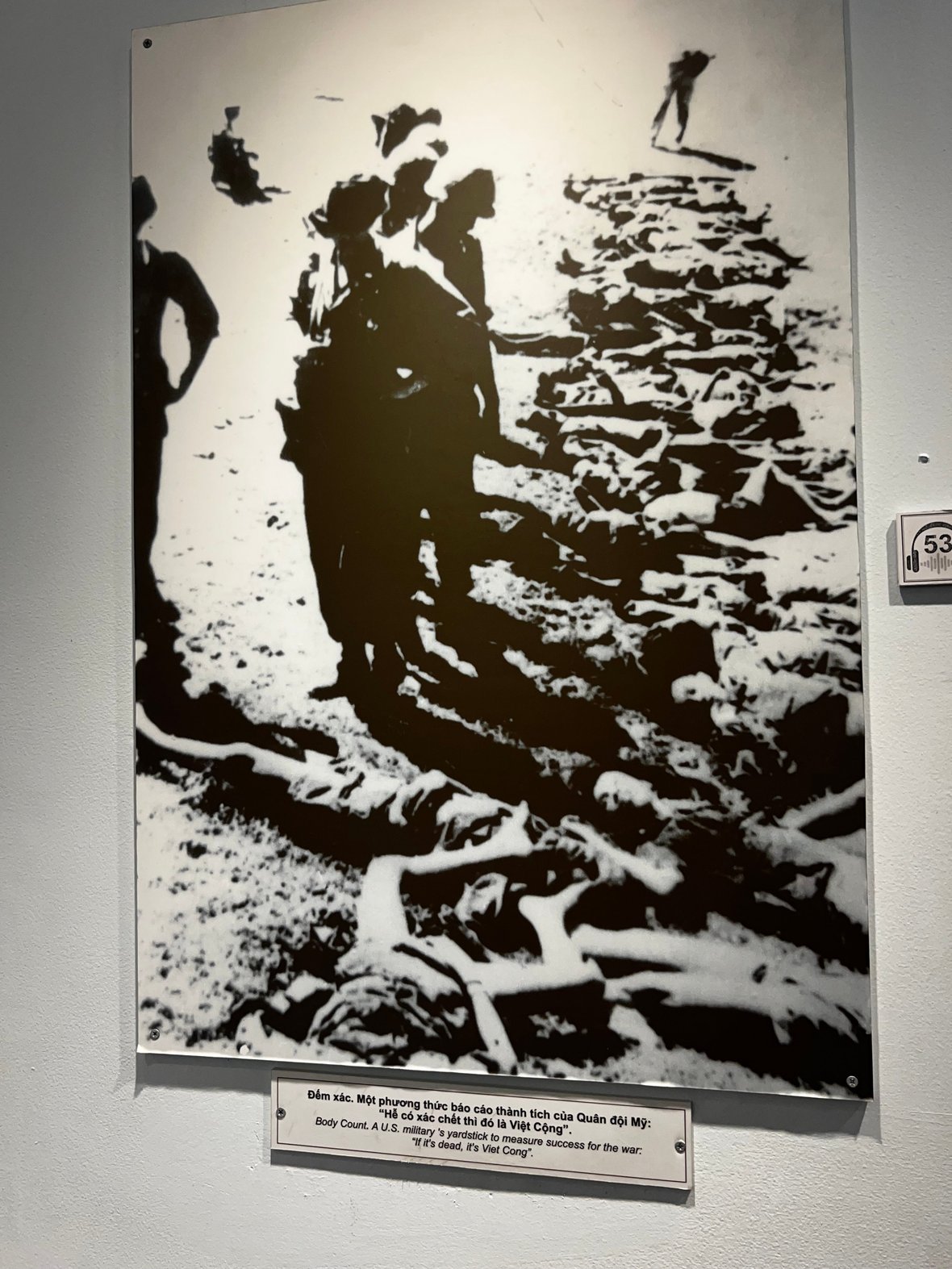
Photo of a black-and-white wartime photograph of bodies above a museum label about body count.
The museum’s label calls “body count” the U.S. military’s yardstick for success in the war: “If it’s dead, it’s Viet Cong.”ETHAN WARD
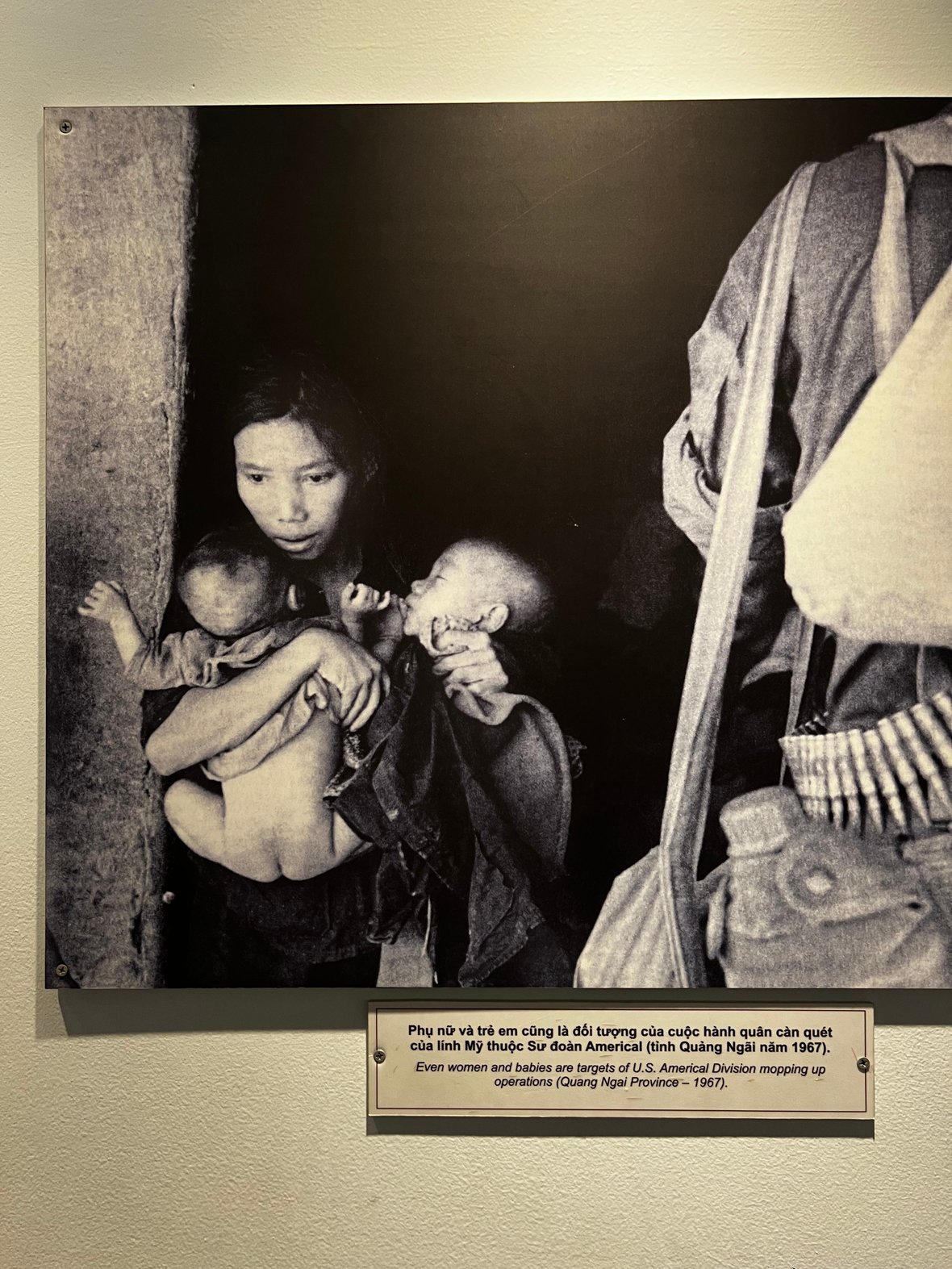
Photo of a museum photograph showing a woman holding two small children, with part of a soldier beside them and a label below.
A woman holds two children in a photograph the museum links to U.S. Americal Division operations in Quảng Ngãi Province in 1967. The label begins, “Even women and babies are targets.”ETHAN WARD
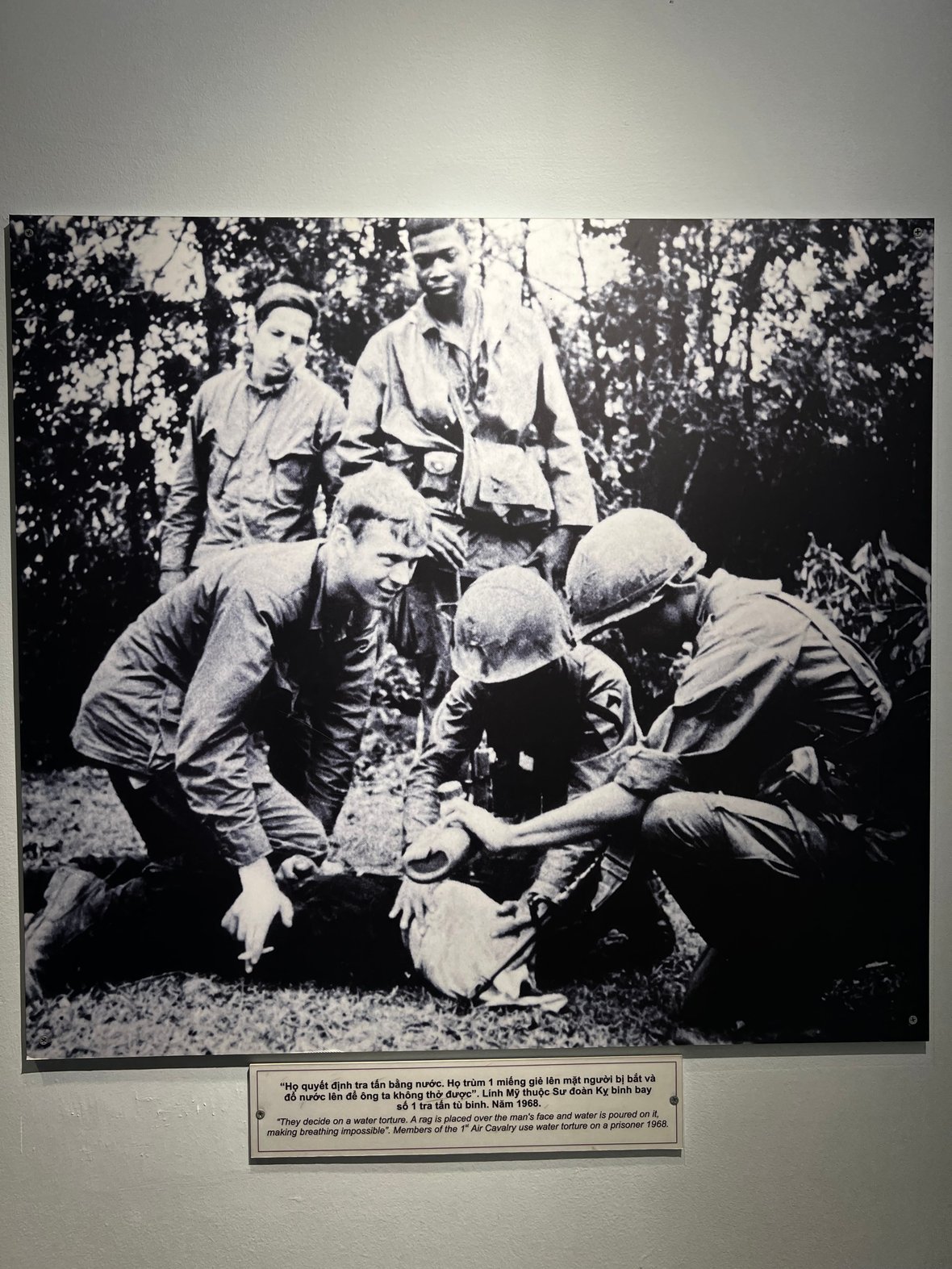
Photo of a black-and-white museum photograph of American soldiers holding down a Vietnamese prisoner, with a Black soldier standing behind them.
I noticed a Black soldier standing behind the men torturing a Vietnamese prisoner. Being Black did not put him outside the American force in that image.ETHAN WARD
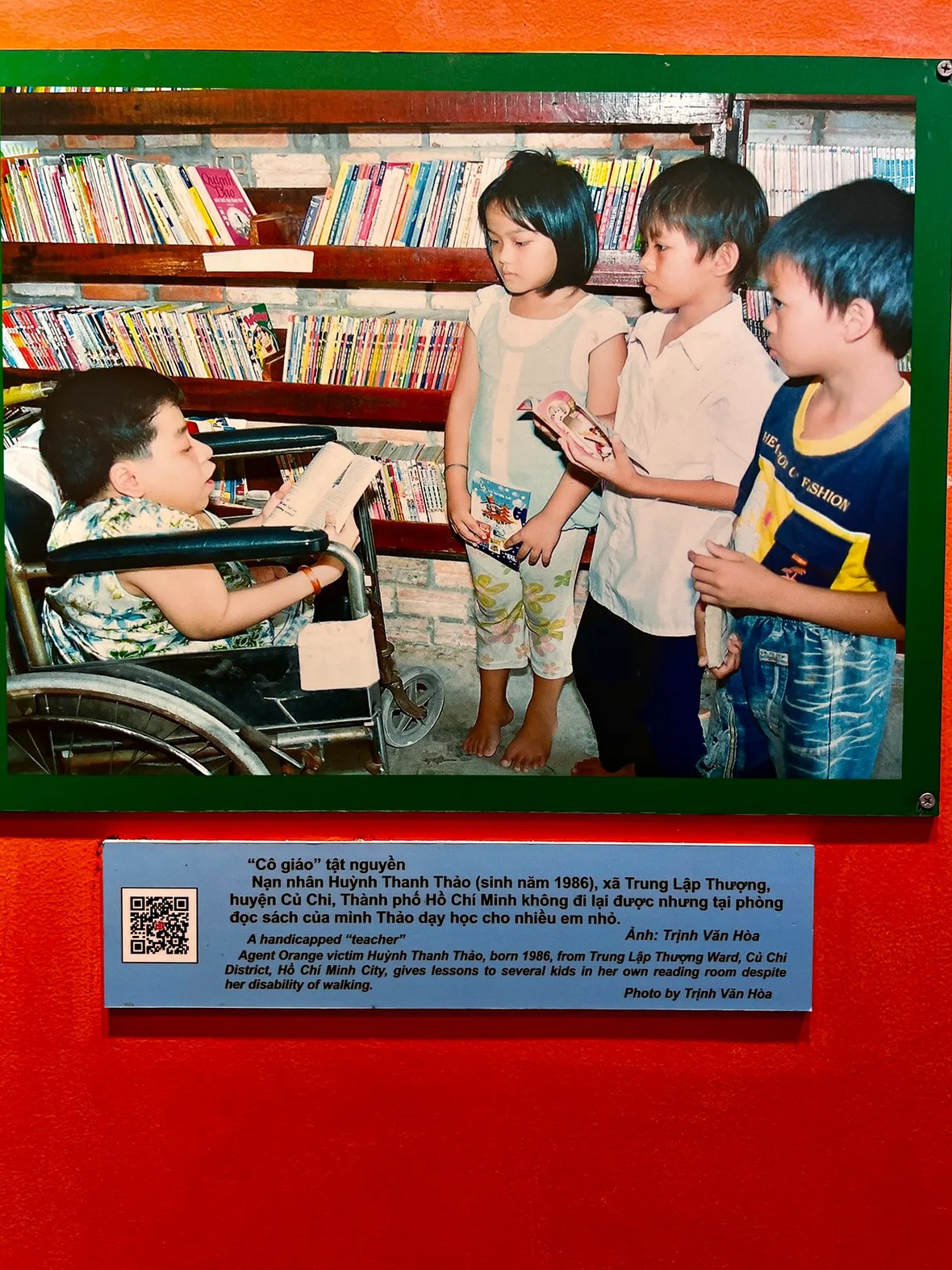
Photo of a museum photograph of Huỳnh Thanh Thảo in a wheelchair with a book, teaching three children beside shelves of books.
Huỳnh Thanh Thảo teaches children in her reading room. The museum identifies her as an Agent Orange victim born in 1986, after the war ended. Photograph by Trịnh Văn Hòa, as credited by the museum.ETHAN WARD
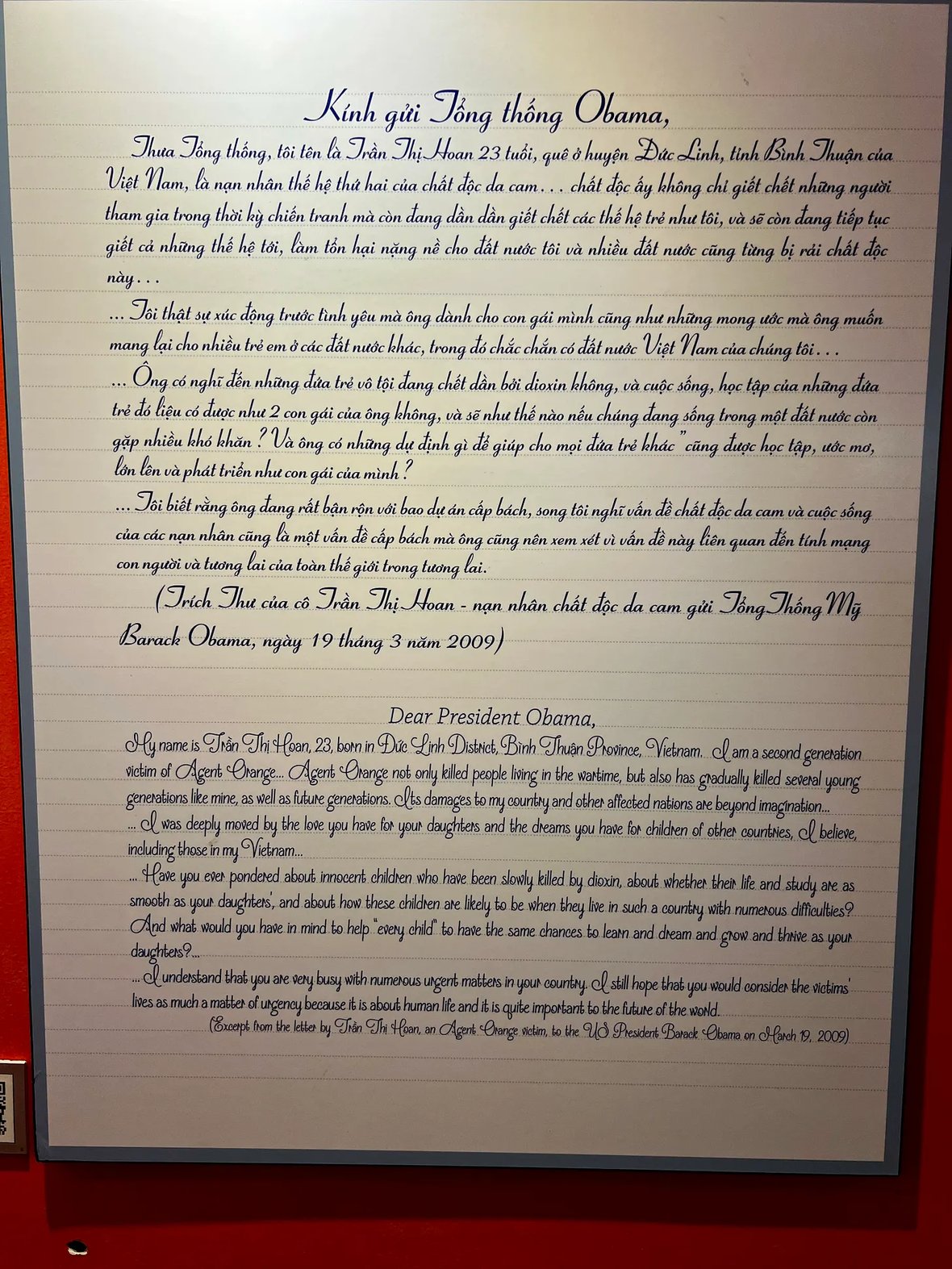
Photo of a museum panel showing an excerpt from Trần Thị Hoan’s letter to President Barack Obama in Vietnamese and English.
In a letter dated March 19, 2009, Trần Thị Hoan introduces herself to President Barack Obama as a 23-year-old second-generation Agent Orange victim. She asks him to consider affected children’s chances to learn and grow, as he would those of his own daughters.ETHAN WARD
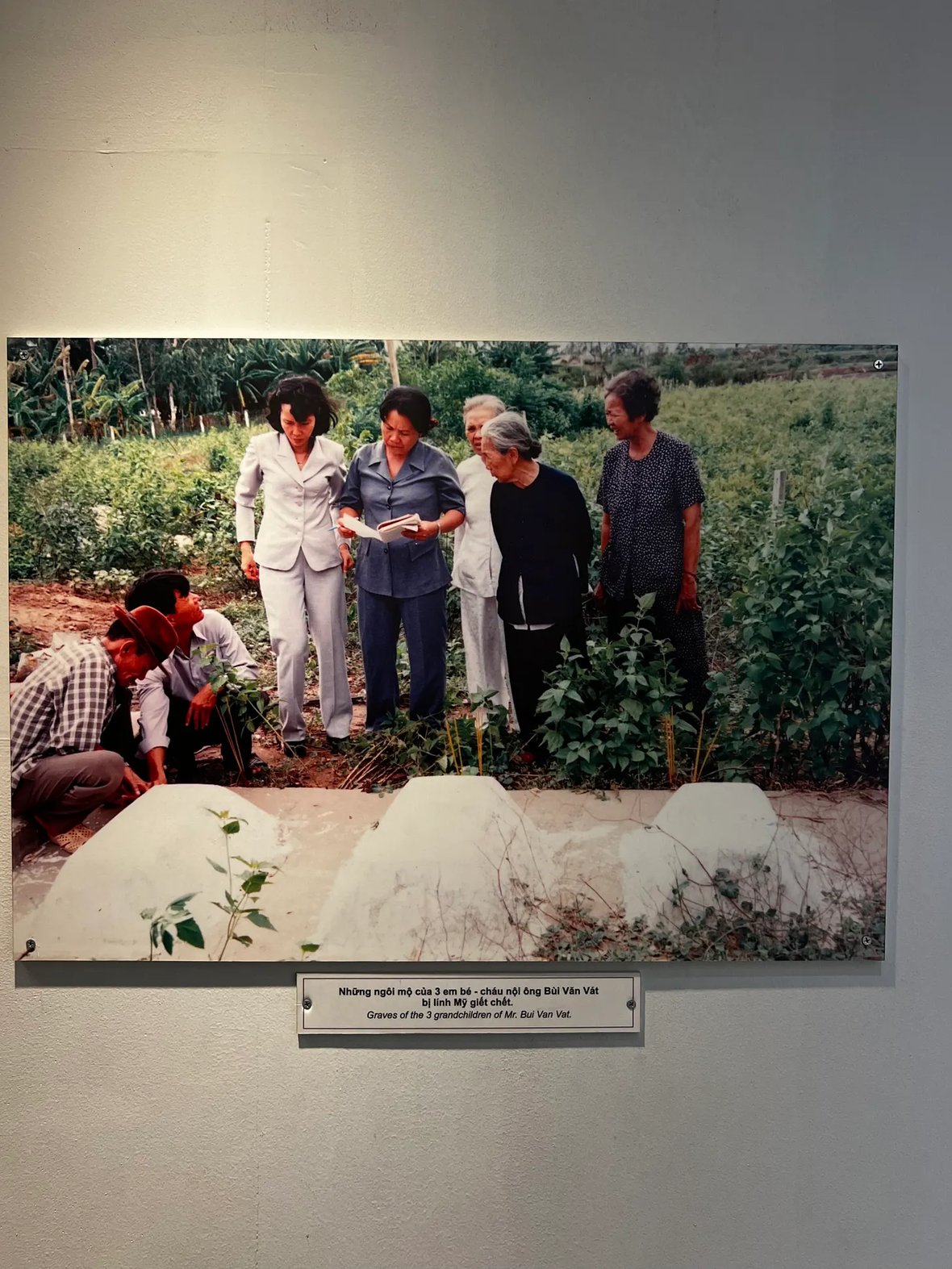
Photo of a museum photograph showing a group of people beside three low graves in a green rural setting.
The museum identifies these as the graves of Bùi Văn Vật’s three grandchildren. Its Vietnamese label says U.S. soldiers killed them.ETHAN WARD
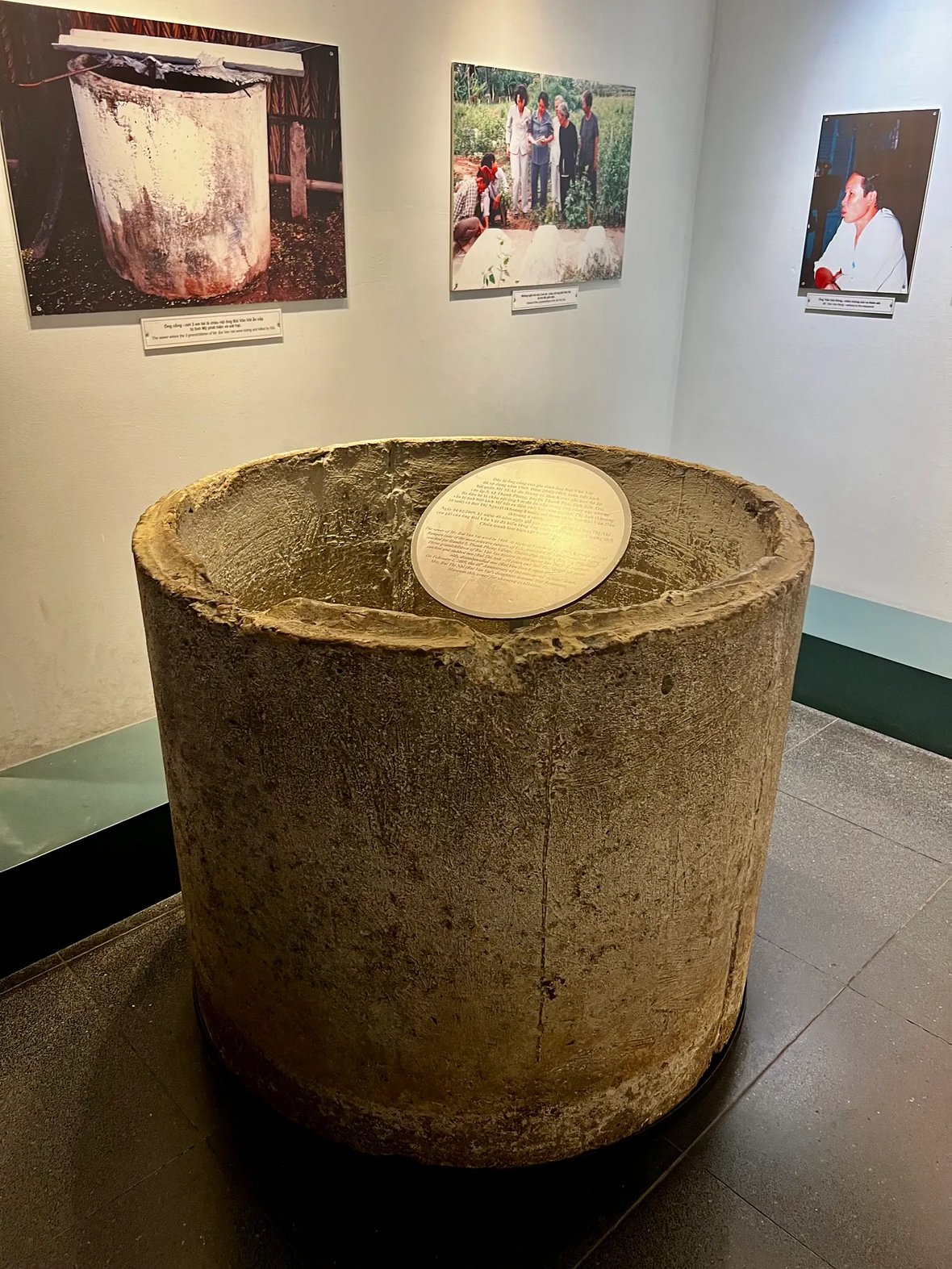
Photo of a short cylindrical concrete sewer section on a museum floor, with a round plaque resting inside its rim.
According to the museum’s account, three children hid in this concrete sewer section during the 1969 raid on Thạnh Phong and were killed after U.S. Navy SEALs found them. The family later donated it to the museum.ETHAN WARD
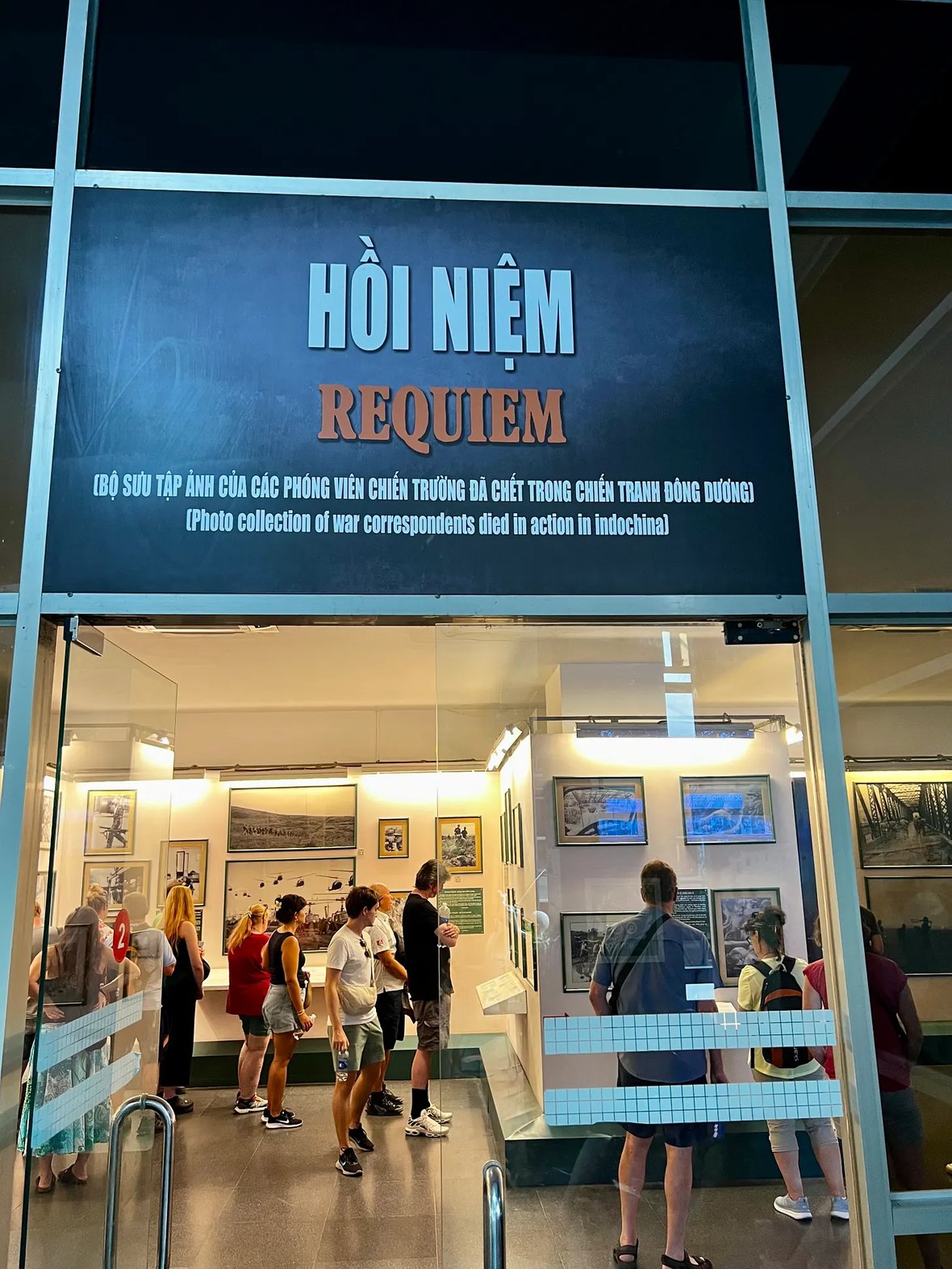
Photo of visitors looking at photographs inside the Requiem gallery, beneath a sign naming war correspondents who died in Indochina.
“Requiem,” a gallery of photographs by war correspondents who died in Indochina.ETHAN WARD
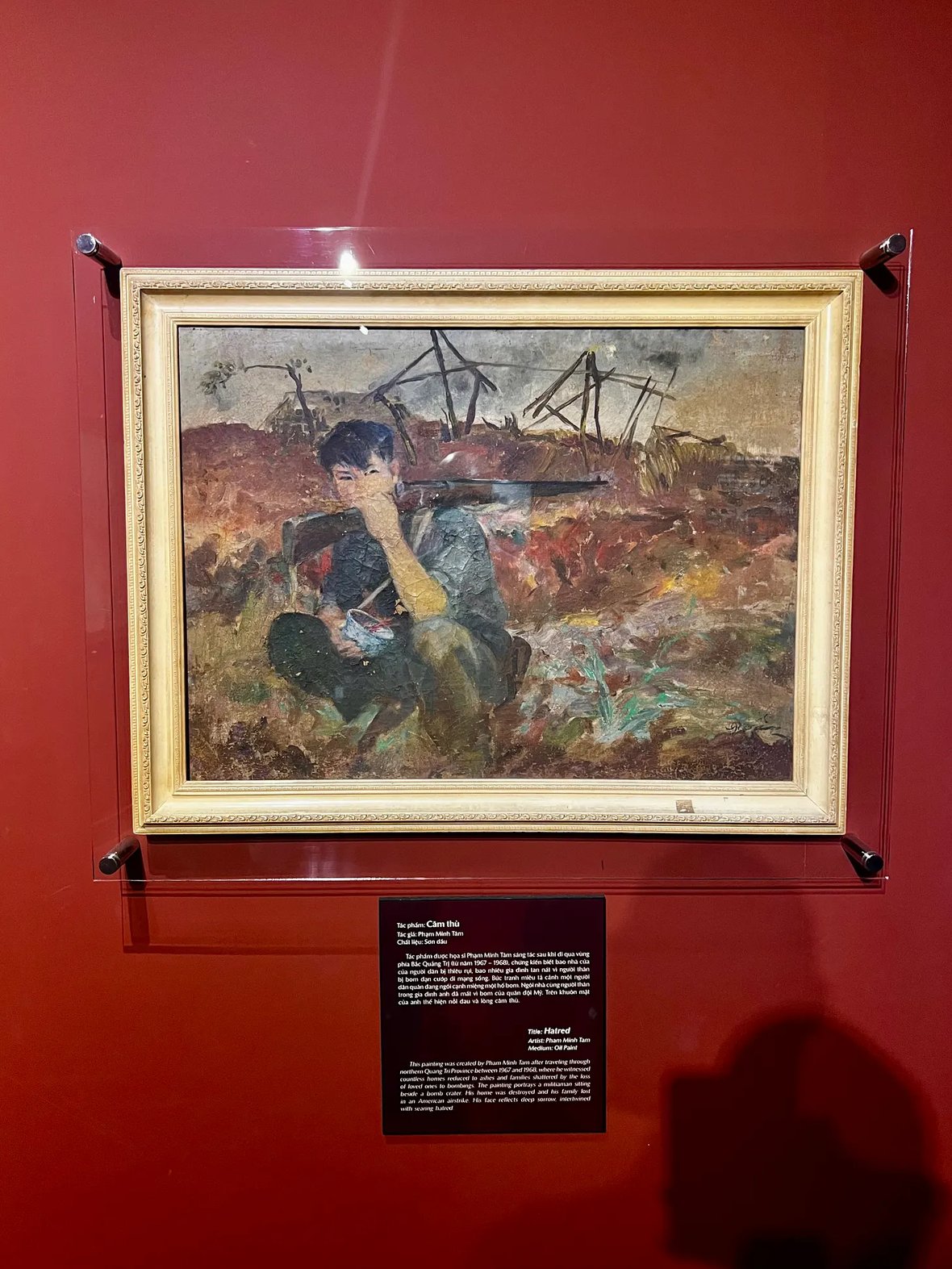
Photo of Phạm Minh Tâm’s oil painting Hatred in a gold frame on a red museum wall, a seated armed figure in a ruined landscape.
“Hatred,” an oil painting by Phạm Minh Tâm.ETHAN WARD

These photographs record some of what I encountered inside: the language on the walls, the lives described in the exhibits, and people looking. I’m still working through what I saw.

Further reading

These helped me think about the visit. Each approaches the history differently.

The Vietnam War: Vietnamese and American Perspectives, edited by Jayne S. Werner and Lưu Đoàn Huỳnh. Essays bringing Vietnamese and American perspectives into conversation about the war and its aftermath.

Embers of War: The Fall of an Empire and the Making of America’s Vietnam, by Fredrik Logevall. A history of the French conflict and the beginnings of American involvement.

Vietnam 1945: The Quest for Power, by David G. Marr. A detailed account of the struggle over Vietnam’s future as French rule and Japanese occupation gave way to competing claims to power.

“Vietnam: Historians at War,” by Mark Moyar. An argument from the revisionist side of disputes over how the war is written about, rather than a neutral overview of those disputes.

Each issue has a letter from me, one long story, and picks I’d book again.

Free. One email a month. I never sell your address.